
Navigating Japan's CBD Market
Key Takeaways
What makes Japan's CBD market unique?
Japan’s CBD market is rapidly growing but is one of the most restrictive globally due to its zero-tolerance policy for THC. RaswCBD material must contain no more than 10 ppm THC (0.001%), far stricter than the 0.3% THC limit in the US and Europe.
What are the key challenges in importing CBD isolate powder into Japan?
- Strict THC Regulations: CBD raw materials exceeding 10 ppm THC are considered illegal and subject to destruction, with the potential for criminal penalties. CBG Products are limited to ≤ 1ppm THC.
- Purity Standards: Very few global hemp processors are capable of meeting Japan’s THC residual restrictions; most “THC-free” CBD isolates on the market fall well short of Japan’s ultra-low THC threshold.
- Documentation Requirements: Importers must provide comprehensive Certificates of Analysis (COAs) and traceability documentation of the full chain of custody.
How can importers ensure compliance with Japan's regulations?
Source from CBD processors that can produce Ultra-pure CBD Isolate Powder with THC levels at or below 10 ppm reliably batch-to-batch. Your sourcing partner should be also be able to supply ISO 17025 third-party accredited lab COAs and full chain of custody documentation.
Why are accurate and trustworthy third-party lab COAs critical for importing CBD into Japan?
Japan’s Ministry of Health, Labour and Welfare (MHLW) requires COAs from ISO 17025-accredited labs to verify cannabinoid profiles, that THC levels (Δ9 and Δ8) are at or below 0.001% and to confirm the absence of pesticides, heavy metals, residual solvents, and mycotoxins.
What are the benefits of landed inventory in Japan?
CBD Isolate Powder inventory from a reputable hemp processor with pre-positioned inventory in Japan offers significant logistical and market advantages.
- Inventory already cleared through Japanese Customs reduces the risk of the product being confiscated or destroyed.
- Domestic deliveries are faster and less expensive to allow for expedited order fulfillment and changes in demand.
- Reduces the import process complexity.
Table of Contents
How Difficult is it to Import CBD into Japan?
For product developers and raw ingredient suppliers looking to import CBD into Japan, the pathway is complex, with legal and logistical hurdles that have created a significant supply shortage and left demand unmet. Japan’s zero-tolerance policy for THC means that only raw materials abiding by the ≤ 10 PPM limit, with reliable and accurate COAs and a documented full chain of custody, will pass through customs. Understanding these challenges is the first step toward successfully entering this rewarding market.
The most important rule for any importer to understand is the THC limit. Unlike the 0.3% THC limit standard in the United States and Europe, Japan requires CBD raw materials to contain no more than 10 ppm THC, which translates to only 0.001% THC.
Restrictions Based On Plant Part Shift to Ingredient Content, Specifically the Presence of THC
Historically, Japan only allowed CBD derived from the mature stalks and seeds of the hemp plant into the country. While recent rule changes arising out of the amended Cannabis Control Law (CCL) and Narcotics and Psychotropic Substances Control Law (NPSCL) allow extraction from other parts, the final CBD raw material must still meet the new strict THC standards of ≤ 10 ppm THC (read more). Any product exceeding this threshold is considered illegal cannabis and is subject to immediate destruction, with potential criminal penalties for the importer.
This ultra-low THC restriction presents a significant barrier to entry, as very few global cannabinoid processors can consistently produce CBD, CBG or CBN isolate that meets this standard of purity.
Why THC-free CBD Isolate Simply Isn’t Enough For The Japan Market
Most CBD isolates on the market, while labeled “THC-free,” may still contain trace amounts of THC that are well above Japan’s legal limit. Standard purification processes often aren’t enough to reduce THC to levels considered legal in Japan.
Importing CBD raw ingredients failing to meet the 10 ppm standard can lead to costly delays, seizure of goods and even damage to a brand’s reputation. This is why sourcing Japan-compliant CBD Isolate Powder – 1ppm THC with ISO 17025 third-party accredited lab COAs is highly recommended for success.
What is the Best Way to Import Japan-compliant CBD Isolate into Japan?
Successfully importing CBD Isolate Powder into Japan requires a multi-pronged approach focused on purity, consistency, testing and documentation. The following steps can help navigate the process effectively.
Do Not Compromise on Quality – Source Only Ultra-Pure, Japan-Compliant CBD Isolate
A successful import strategy starts with the product itself, with your supplier as your most important partner. Vet sources thoroughly and ensure they can consistently manufacture CBD Isolate Powder that meets Japan’s restrictive THC tolerance, if not surpass, to even lower limits. This requires advanced scientific and engineering skills, along with manufacturing techniques that go well beyond typical refinement methods.
For example, Red Mesa Science & Refining uses highly customized distillation and crystallization equipment in its initial processing to maximize CBD concentration while removing other cannabinoids, including THC. But further purification is critical in driving down the THC residual and is extremely difficult to accomplish.
Batch-to-Batch Consistency is Critical to Trust
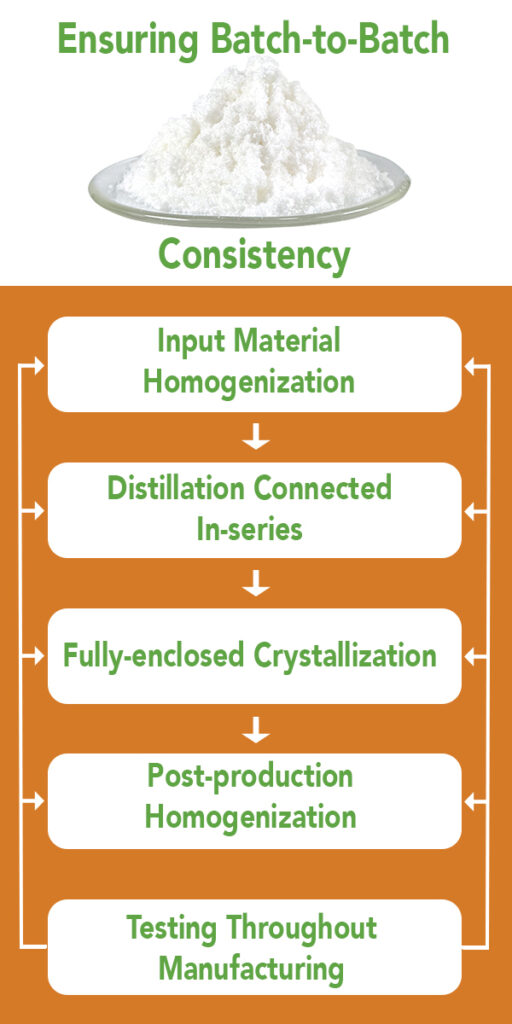
Consistency is vital to establishing long-term partnerships. From the first sample to the end of the lot, there must be consistency throughout. To ensure uniform purity and the compliant removal of THC, Red Mesa initiated a two-step homogenization process to help ensure homogenous molecular distribution, beginning with the input material through to the final output of CBD Isolate Powder raw materials. Red Mesa’s process is so advanced that the CBD Isolate Powder surpasses Japan’s requirements, with THC levels at or below 0.0001%, or 1ppm THC.
Prioritize Third-Party Lab Testing and COAs to Build Trust
Japan’s Ministry of Health, Labour and Welfare (MHLW) places a tremendous amount of importance on third-party lab COA validation and requires that importers use a third-party lab that is accredited under ISO 17025 to prove THC levels are at or below the legal limit. Labs of this caliber have been accredited to the ISO/IEC 17025 standard by an independent accreditation body and have demonstrated competence, impartiality and consistent operation in generating reliable tests and calibration results.
ISO 17025 accredited third-party lab COAs add a layer of credibility that Japanese customs officials recognize and trust. A comprehensive Certificate of Analysis (COA) from an approved lab should verify:
- Cannabinoid profile
- THC levels (Δ9 and Δ8) at or below 0.001%
- Absence of pesticides, heavy metals, residual solvents and mycotoxins
Red Mesa Science & Refining provides full-panel COAs for every batch from MHLW-approved labs, giving importers the confidence and documentation needed to support smooth customs clearance.
Ensure Full Traceability and Documentation
Japanese regulators require a complete and transparent supply chain. This means you must be able to provide a documented full chain of control, from the origin of the US-grown industrial hemp to the final raw ingredient. This includes information about cultivation, extraction, purification and manufacturing.
Working with a supplier that prioritizes Operational Excellence and operates under a rigorous quality management system is crucial. Highly valued are certifications and registrations beyond current regulatory requirements, including:
- ISO 9001:2015 Certification: Demonstrates a commitment to a comprehensive, end-to-end quality management system.
- cGMP Compliance: Adheres to Current Good Manufacturing Practices to ensure a company-wide effort to ensure product safety and consistency.
- FDA Registration: Operates as an FDA-registered food facility, complying with 21 CFR Part 111 (dietary supplements) and 117 (human food) regulations.
These credentials provide confidence, ensuring that the CBD isolate powder was produced in a highly controlled, high-quality environment.
The Red Mesa Advantage – An Experienced Partner With Inventory in Both Japan and the US
Red Mesa has made navigating the complexities of importing CBD Isolate Powder into Japan much easier. We have mastered producing ultra-pure, compliant CBD and have direct experience in the Japanese market.
Red Mesa offers a reliable supply of Japan-compliant CBD isolate, with stocking depots in both the US and Tokyo. This local presence in Japan helps shorten delivery times and simplifies logistics.
Additional Guidelines for Entering the Japanese CBD Market
After having secured the best CBD Isolate Powder Manufacturer, here are some final tips to capitalize on Japan’s growing demand for CBD:
- Prepare Your Paperwork: Have all your documentation in order before shipping. This includes COAs, traceability proof and any other forms required by Japanese customs.
- Understand the Market: Research the types of CBD products that are popular in Japan. Isolate’s versatility makes it suitable for wellness tinctures, skincare, sleep aids, vapes and edibles, all of which are growing categories.
Achieving Success
Importing CBD into Japan is challenging, but with the right product, qualified third-party testing labs, and a manufacturing partner invested in your success, it is entirely achievable. Prioritizing compliance and quality can help you enter a high-demand, low-supply CBD market, with Japan leading the world in developing highly controlled, safe, and innovative products.